In the ever-evolving landscape of artificial intelligence (AI), one term that has gained immense popularity and revolutionized the field is “neural networks.” These intricate systems have brought about remarkable advancements in machine learning, enabling computers to perform tasks that were once thought to be exclusive to human intelligence. In this article, we will delve into the fascinating world of neural networks, exploring their inner workings, applications, and the profound impact they have on our daily lives.
Understanding the Basics: What Are Neural Networks?
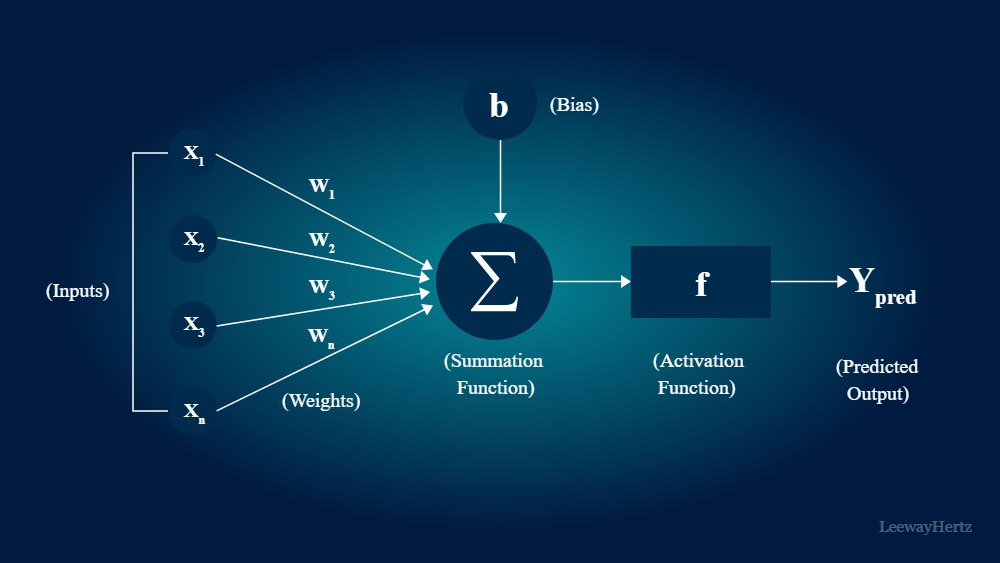
At its core, a neural network is a computational model inspired by the structure and function of the human brain. Just as our brains consist of interconnected neurons that process and transmit information, neural networks are composed of interconnected artificial neurons or “nodes.” These nodes are organized into layers, typically consisting of an input layer, one or more hidden layers, and an output layer.
The strength of neural networks lies in their ability to learn from data. They are trained on vast datasets, adjusting the connections between nodes to recognize patterns, make predictions, or solve complex problems. This process, known as “training,” involves iteratively fine-tuning the network’s parameters until it can perform the desired task with high accuracy.
The Building Blocks of Neural Networks
To comprehend how neural networks function, it’s crucial to grasp the fundamental components that make up these remarkable systems:
- Input Layer: This is where data enters the neural network. Each node in the input layer corresponds to a specific feature or aspect of the input data.
- Hidden Layers: These intermediate layers perform complex transformations on the input data. The number of hidden layers and the number of nodes in each layer can vary, depending on the complexity of the task.
- Output Layer: The output layer produces the final result or prediction based on the information processed in the hidden layers.
- Weights and Biases: Neural networks use weights and biases to adjust the strength of connections between nodes. These parameters are continually updated during training to minimize errors.
- Activation Functions: Activation functions introduce non-linearity into the network, enabling it to learn complex patterns. Common activation functions include sigmoid, ReLU (Rectified Linear Unit), and tanh (hyperbolic tangent).
Applications of Neural Networks
The versatility of neural networks has led to their widespread adoption across various domains. Here are some notable applications:
- Image Recognition: Convolutional Neural Networks (CNNs) excel in tasks like image classification, object detection, and facial recognition. They have been employed in self-driving cars, medical imaging, and security systems.
- Natural Language Processing: Recurrent Neural Networks (RNNs) and Transformer models have transformed the field of natural language processing. Applications include language translation, sentiment analysis, chatbots, and speech recognition.
- Recommendation Systems: Neural networks power recommendation algorithms used by platforms like Netflix and Amazon. They analyze user behavior to suggest personalized content and products.
- Healthcare: Neural networks assist in disease diagnosis, drug discovery, and predicting patient outcomes. They can analyze medical images, genomic data, and electronic health records.
- Financial Forecasting: In the world of finance, neural networks are used for stock price prediction, fraud detection, and algorithmic trading.
- Autonomous Systems: Neural networks play a vital role in autonomous vehicles, enabling them to perceive and navigate the environment safely.
Challenges and Future Prospects
While neural networks have achieved remarkable success, they are not without challenges. Some of the key issues include the need for vast amounts of labeled data, high computational requirements, and the risk of overfitting (when the model performs well on training data but poorly on new data).
The future of neural networks holds exciting possibilities. Researchers are actively exploring ways to make them more efficient, robust, and interpretable. Advancements in hardware, such as Graphics Processing Units (GPUs) and specialized AI chips, continue to accelerate the development of neural networks.
Conclusion
In the realm of artificial intelligence, neural networks are the driving force behind groundbreaking innovations. They have revolutionized industries, from healthcare to entertainment, and continue to push the boundaries of what machines can achieve. As we unlock the mysteries of the human brain and harness its computational power, neural networks will undoubtedly play an even more significant role in shaping our future. Whether it’s improving the accuracy of medical diagnoses or enhancing the user experience on our favorite apps, the influence of neural networks is pervasive and profound, promising a world where machines truly understand and assist us in remarkable ways.
 AI Techy Talks