In the ever-evolving landscape of technology, the emergence of artificial intelligence (AI) has been nothing short of a game-changer. From enhancing customer experiences to optimizing business operations, AI has infiltrated various sectors, revolutionizing the way we live and work. One of the most critical areas where AI has demonstrated its prowess is in anomaly detection. In this article, we will delve into the significance of AI in anomaly detection and explore how it is transforming security and other domains.
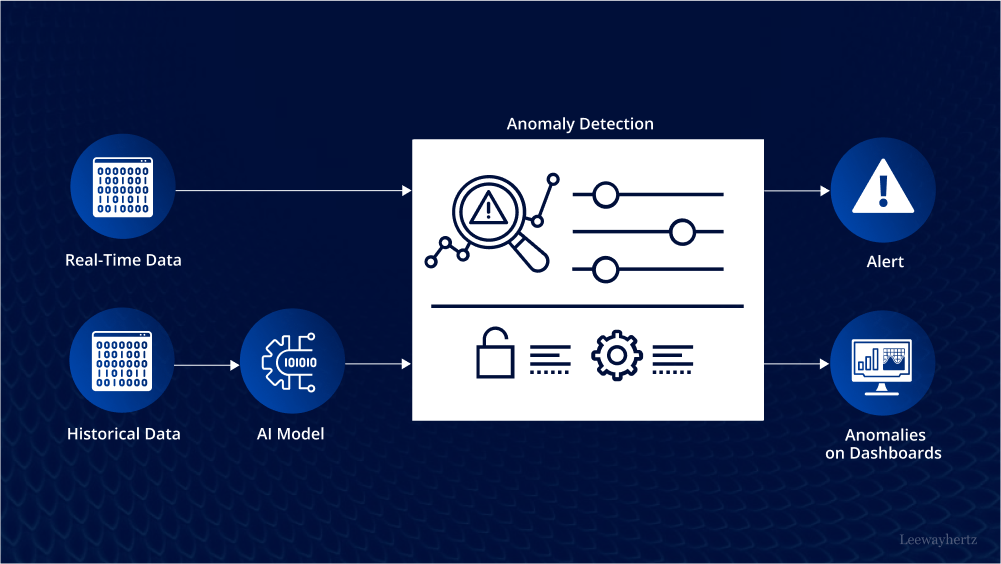
The Rise of Anomaly Detection
Anomalies, by definition, are deviations from the expected or normal behavior of a system or process. Detecting anomalies is vital in numerous fields, including cybersecurity, fraud detection, industrial monitoring, and healthcare. Traditional methods of anomaly detection typically relied on rule-based systems or statistical techniques, which were often limited in their ability to adapt to complex and dynamic data patterns.
AI-Powered Anomaly Detection
AI, particularly machine learning, has provided a powerful alternative to conventional approaches. Machine learning algorithms can analyze vast datasets, identifying patterns and trends that may not be apparent to human analysts. When applied to anomaly detection, AI can distinguish between normal and abnormal behavior with remarkable accuracy.
One of the key advantages of AI in anomaly detection is its ability to adapt and improve over time. Machine learning models can learn from historical data, continuously refining their understanding of what constitutes normal behavior. This adaptive capability is especially crucial in cybersecurity, where attackers constantly evolve their tactics.
AI in Cybersecurity
AI has ushered in a new era of cybersecurity by bolstering defense mechanisms against cyber threats. Traditional antivirus software and firewalls often struggle to keep up with the ever-changing tactics of hackers. AI, on the other hand, can proactively identify anomalies indicative of cyberattacks, even when dealing with previously unseen attack vectors.
For instance, AI-powered anomaly detection systems can monitor network traffic and identify suspicious patterns that may signal a data breach or a malware infection. By promptly detecting and responding to these anomalies, organizations can mitigate the potential damage and safeguard their sensitive data.
Beyond Security: AI in Healthcare
While AI’s role in security is undoubtedly significant, its applications extend far beyond this realm. In healthcare, AI-driven anomaly detection is enhancing patient care and medical research. Electronic health records (EHRs) contain vast amounts of patient data, making it challenging to identify irregularities or potential health risks manually.
AI algorithms can sift through EHRs, flagging anomalies such as unusual test results or unexpected symptoms. This proactive approach enables healthcare providers to identify issues early and intervene, potentially saving lives and reducing healthcare costs.
Moreover, AI is aiding medical researchers in identifying patterns and anomalies in massive datasets. This can lead to breakthroughs in disease diagnosis, treatment development, and the discovery of previously unrecognized factors influencing patient outcomes.
The Road Ahead: Challenges and Ethical Considerations
While AI in anomaly detection holds great promise, it is not without challenges. One significant concern is the potential for false positives and false negatives. An overzealous AI system may flag normal behavior as an anomaly, causing unnecessary alarm. Conversely, it could miss genuine anomalies, leading to security breaches or missed medical diagnoses.
Ethical considerations also come into play. The use of AI in surveillance, for example, raises questions about privacy and civil liberties. Striking the right balance between security and individual rights is a complex challenge that policymakers and organizations must address.
Conclusion
AI in anomaly detection represents a transformative force across various domains, from cybersecurity to healthcare and beyond. Its ability to analyze vast datasets, adapt to changing circumstances, and identify anomalies with precision makes it an invaluable tool for safeguarding systems, improving patient care, and advancing scientific research.
However, as AI continues to evolve and integrate into our lives, it is essential to remain vigilant regarding the potential risks and ethical implications. Striking a balance between harnessing the power of AI for anomaly detection and addressing these concerns is key to realizing the full potential of this groundbreaking technology.
In the years to come, AI in anomaly detection will undoubtedly continue to evolve and shape the way we approach security, healthcare, and data analysis. Embracing these advancements responsibly and ethically will be essential in ensuring that AI remains a force for good in our increasingly digital world.
 AI Techy Talks